
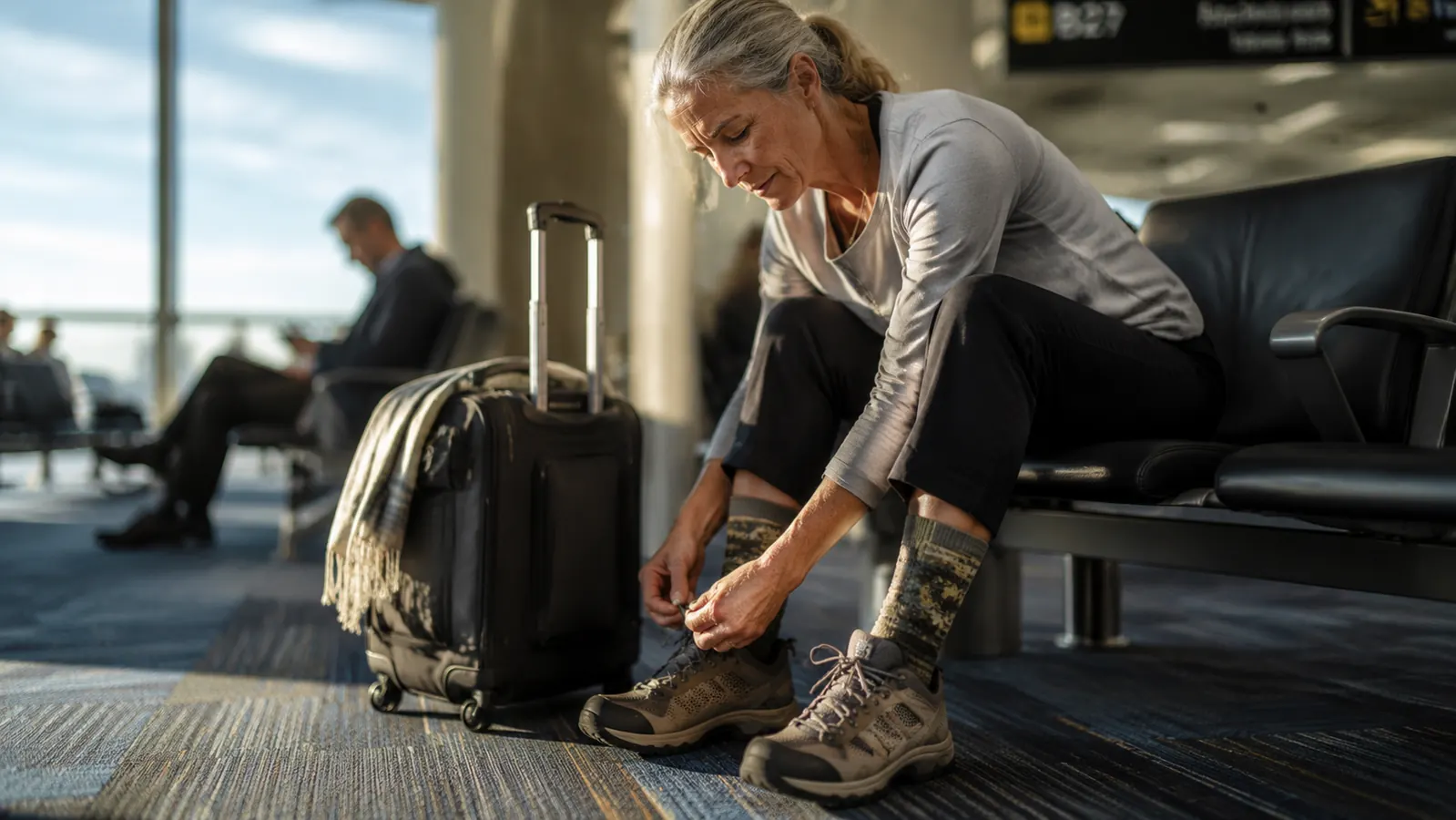
The last time I landed in Denver after a six-hour flight without my compression socks, I spent the first evening of the trip with my feet up on a pillow instead of eating dinner with my daughter. Both ankles had swollen to the point where my shoes felt like a punishment. That was the trip that made me take compression socks seriously, not as a medical device, but as basic travel gear. I bought my first pair of Sockwell Women's Circulator Moderate Compression Socks the following week. That was more than two years ago, and I have since worn them on eleven flights, four road trips, three garden festivals, and more ordinary errand days than I can count.
I am 62 years old. I teach a water aerobics class two mornings a week, I walk my neighborhood most evenings, and I travel constantly to see my four grandchildren across three states. My legs are not a problem in everyday life. Long travel days are where I used to pay for it. So this review comes from two solid years of real use, not a weekend trial, and it covers everything I have noticed: swelling control, fit through the calf, how the socks hold up after dozens of wash cycles, and the handful of things I wish were different.
The Quick Verdict
The best travel compression sock I have found for active women over 60 who want real graduated compression without sacrificing comfort or style. Not cheap, and sizing runs narrow through the calf for some, but they hold up beautifully and actually do the job they promise.
Amazon Check Today's Price →Your ankles should not decide what you do on the first day of a trip.
The Sockwell Circulator delivers moderate graduated compression in merino wool that feels nothing like the drugstore versions. Check today's price and available colors on Amazon.
Amazon Check Today's Price on Amazon →How I Have Used These Over Two Years
My testing was not planned. I bought the Sockwell Circulators out of genuine need, wore them obsessively for a few months, then kept wearing them because they kept working. The structured testing, if you want to call it that, happened naturally: I had flights where I forgot to pack them and had to compare, road trips where I wore them for six to eight hours in the car, and garden days where I put them on in the morning and stayed on my feet until dinner.
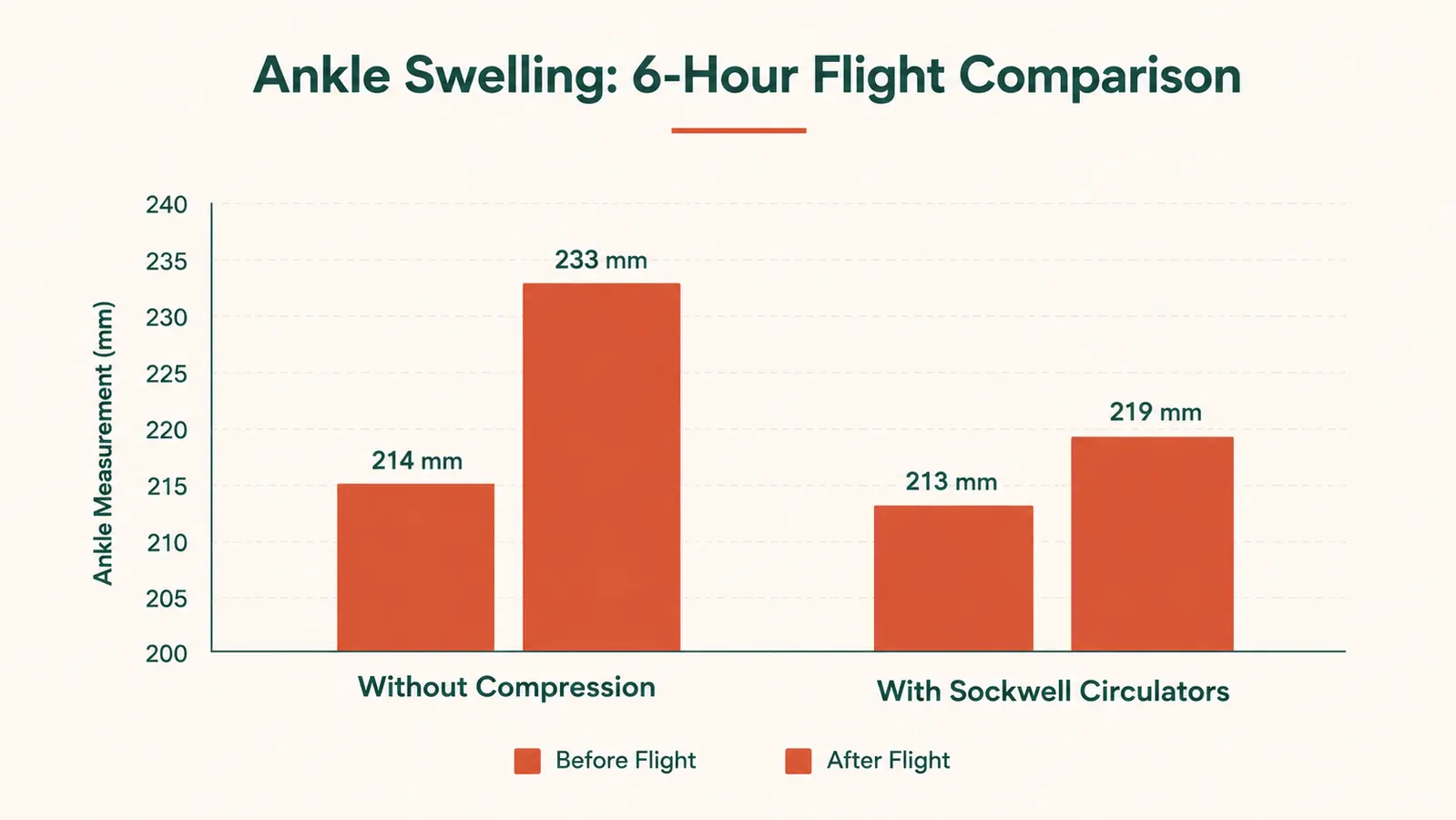
My first real test was a flight from Orlando to Seattle, with a connection in Phoenix. Total travel time: just over nine hours. I wore the Sockwell Circulators from the moment I put on my shoes at home. When I landed and got to my hotel, I took off my shoes expecting the usual puffiness. My ankles were normal. Not slightly reduced. Normal. That single result kept me buying Sockwell ever since.
I have worn them on a four-day garden tour that involved six to eight hours of walking on grass and gravel each day. I have worn them driving from central Florida to Tennessee for a family visit, which took eleven hours with stops. And I have worn them to teach my water aerobics class on mornings when my schedule goes straight from the pool into a full day of errands. They have seen more of my life than most things in my sock drawer.
What Graduated Compression Actually Does (and Does Not Do)
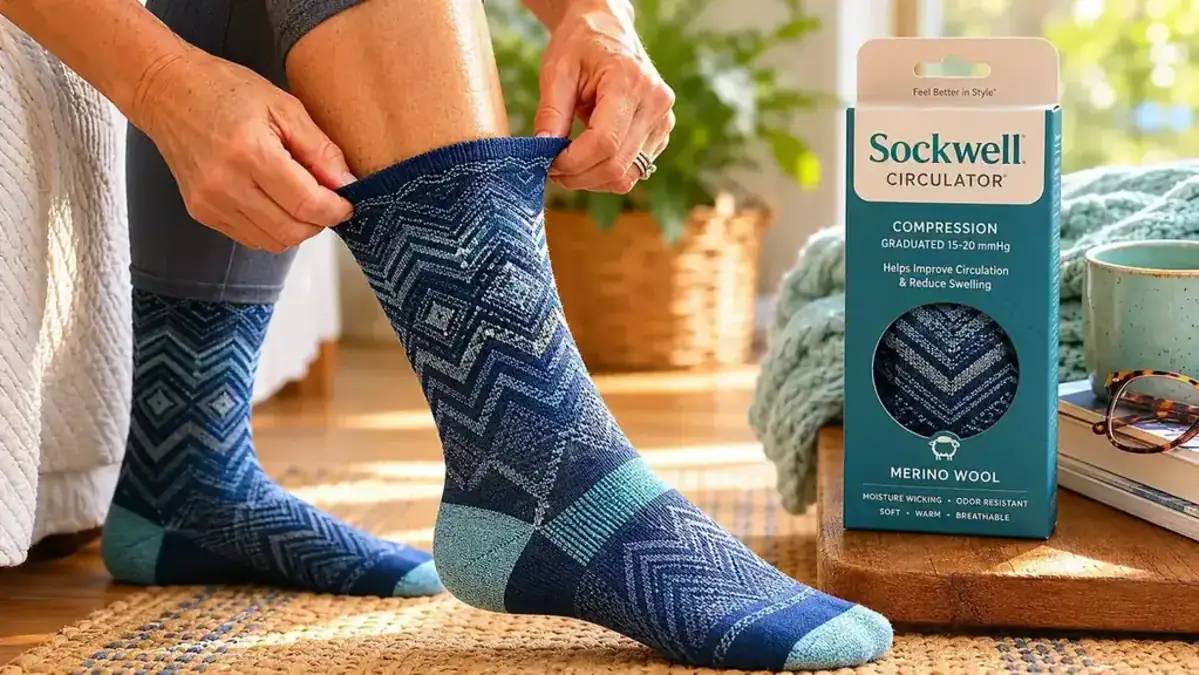
Before I get into the specifics, I want to be honest about what compression socks can and cannot promise. These are wellness-level compression socks, rated at 15-20 mmHg, which is the moderate range most commonly recommended for travel. They are not medical-grade compression for diagnosed venous insufficiency. What they do is apply gentle, graduated pressure that is firmer at the ankle and gradually lighter as it goes up the calf. That gradient helps blood return upward against gravity, which is what you are fighting when you sit still for hours on a plane or in a car.
What I noticed consistently over two years: swelling that used to be obvious after four-plus hours of travel was either absent or barely noticeable. My legs felt less heavy when I stood up after long flights. I did not notice a dramatic difference on shorter flights under three hours, which makes sense because the problem compounds with time. If your legs feel fine after normal travel days, these may not do much for you. If you know the puffiness I am describing, you will feel the difference.
One thing I was not expecting: they also helped on long garden days. Standing on grass and walking on uneven ground for hours is its own kind of circulatory demand. My feet and calves felt noticeably less tired at the end of days when I wore the Sockwells compared to days I wore regular socks. That was a pleasant surprise that extended how often I reach for them.
Fit, Feel, and the Calf Question
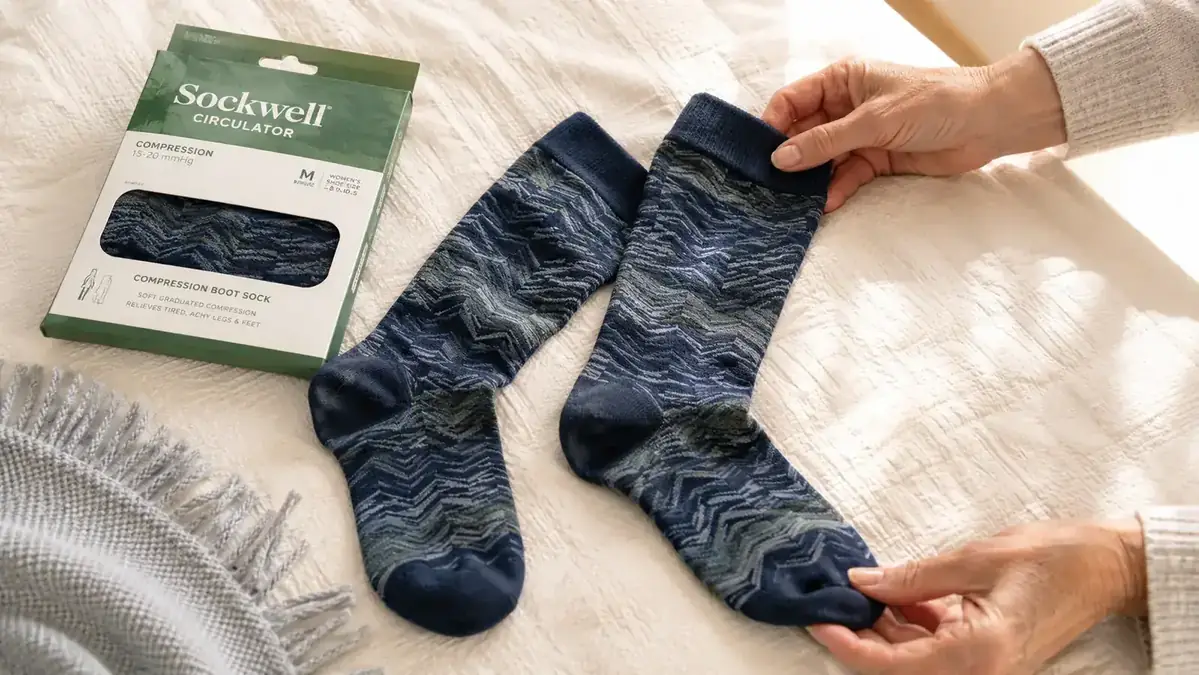
I want to spend real time here because it is the thing most reviews skip. Sockwell uses merino wool as the primary fiber, blended with stretch nylon and a small percentage of spandex. Merino wool is softer than most synthetic compression fabrics, it regulates temperature better than nylon, and it does not get that clammy feel that cheap compression socks develop by hour three of a flight. On a plane, where temperatures swing and circulation air is dry, that makes a genuine difference.
The fit at the ankle and foot is snug but not aggressive. When you first pull them on, you will feel the compression do its job, and it takes a moment to get them up correctly. The graduated nature means the ankle is the tightest point, which can feel surprising the first time if you are used to regular socks. By the second or third wear, it becomes normal. What I appreciate is that once they are on and pulled to full height, they do not roll down, they do not bunch at the ankle, and they do not leave deep indentation marks at the top of the sock.
Now, the calf fit issue that I have to mention honestly: if you have larger calves, pay close attention to the size chart. I am a medium build, and my medium fits me well. A friend who travels with me wears a similar shoe size but has more muscular calves from years of hiking, and she finds the medium feels tight through the upper calf by the end of a long day. She sized up to large, which loosened the foot slightly but was more comfortable through the calf. Sockwell sells the Circulator in S/M and M/L. That is it. If you are between those or at the upper end of either range, try them on at home before a long trip.
My ankles were normal. Not slightly reduced. Normal. That single result on a nine-hour travel day kept me buying Sockwell ever since.
Durability After Two Years of Washing
This is where I expected Sockwell to disappoint me, and it largely has not. Merino wool has a reputation for being delicate. I have destroyed merino sweaters in the wash. But the Circulator is a sock, with a different construction, and Sockwell has the blending right. I have machine washed mine on cold, gentle cycle, and laid flat to dry, for two solid years. I am on my second pair because I bought a second color after six months, not because the first pair failed. The original pair still has good elasticity at the ankle band, the stitching at the toe is intact, and the graduated compression feel is still noticeably present when I put them on.
There is some minor pilling on the heel and toe area after extended use. It does not affect performance, but it does show. A friend of mine washed hers in warm water by mistake a few times and noticed a slight shrinkage through the foot. That is a real risk with merino blends. Use cold water. Do not put them in the dryer. That is the honest maintenance reality of owning a quality merino sock, and it applies here.
For the price, I think the durability is fair. These cost roughly three times what a drugstore compression sock costs, and in my experience, they last considerably longer while being more comfortable throughout. Whether that math works for your budget depends on how often you travel and how much you value daily comfort. For me, a trip every four to six weeks means the cost per wear is low enough that I do not think about it.
What I Liked
- Genuine swelling reduction on flights over four hours, consistently over two years of use
- Merino wool blend feels softer and regulates temperature better than synthetic compression fabrics
- Does not roll down, bunch, or leave deep marks at the top after all-day wear
- Holds up well after dozens of cold machine washes with proper care
- Available in attractive patterns that look like normal socks, not medical hosiery
- Works equally well on long driving days and all-day walking tours, not just flights
Where It Falls Short
- Sizing runs narrow through the upper calf for women with more muscular or larger calves
- Only two size options (S/M and M/L) leaves limited room for fit adjustment
- Requires cold wash and flat dry, which adds a step compared to regular socks
- Minor pilling develops at the heel and toe over extended use
- Price is significantly higher than drugstore compression alternatives
How They Compare to What I Tried Before
Before the Sockwells, I tried three other options. The first was a drugstore brand, the kind sold near the pharmacy in two-packs. They worked for maybe three washes before the compression feel faded significantly. They also rolled down on my calves during flights, which defeated the purpose and required constant adjustment in a cramped airplane seat. The second was a medical-looking white version that a friend recommended. It did the compression job, but the material was hot, synthetic, and made my feet feel damp by midday. I wore them exactly twice.
The third was another merino wool travel sock from a different brand at a similar price. Those were comfortable but the compression felt lighter than the Sockwells. On a flight from Orlando to San Francisco, I noticed more swelling with those than I do with the Circulators. The graduated compression in the Sockwell feels more precisely calibrated, with a clearer difference between ankle and calf tension. That is the thing that keeps me coming back to this specific pair over alternatives I have tried.
Who This Is For
These socks are a strong fit if you are a woman over 50 who travels regularly and knows exactly what it means to step off a plane with heavy, swollen legs. They are especially worth the investment if you travel internationally or cross multiple time zones, because long-haul flights are where the benefit is most noticeable. They also suit active women who spend long days on their feet at festivals, garden shows, or outdoor events where there are no chairs and you are covering real ground. If you care about what your socks look like (and I do), the patterns Sockwell offers are genuinely attractive. I have had people compliment them on airplanes, which has never happened with any other compression sock I have owned.
Who Should Skip Them
If you have a diagnosed circulatory condition, talk to your doctor before relying on wellness-level compression socks. They are not a substitute for medical-grade compression in that context. If you have very large or muscular calves and know sizing up in socks still leaves you constricted, these two-size options may frustrate you. And if you travel only occasionally and your legs feel fine after normal travel days, the cost may not be justified. There are decent options at a lower price point for light, infrequent use.
Two years in, I still pack these for every flight over three hours.
The Sockwell Circulator is the sock I recommend to anyone who asks about travel leg comfort. Merino wool, genuine graduated compression, and they actually last. Check today's price on Amazon.
Amazon Check Today's Price on Amazon →